
Suburb in Focus: Ipswich Region Overview
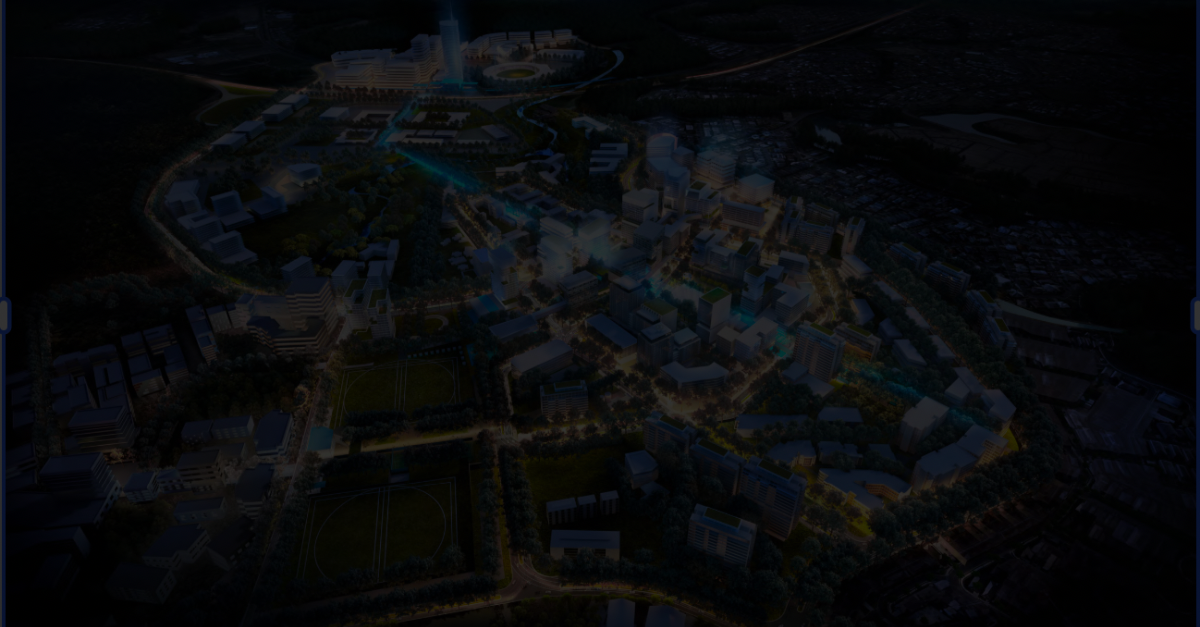
Located approximately 40 kilometres west of Brisbane’s CBD at the junction of five major highways, Ipswich is South East Queensland’s fastest-growing city and one of Australia’s most compelling regional investment stories. Queensland’s oldest provincial city, Ipswich spans more than 1,100 square kilometres and encompasses around 80 suburbs from the established heritage streetscapes of the city centre to the masterplanned communities of Greater Springfield and the rapidly emerging Ripley Valley growth corridor. With direct rail links to Brisbane CBD, RAAF Base Amberley as Australia’s largest military base anchoring significant defence employment, the University of Southern Queensland driving knowledge economy growth, and a city plan targeting 500,000 residents by 2046, Ipswich is no longer simply Brisbane’s affordable western neighbour, it is a city in its own right, with its own economic gravity and a property market that rewards those who understand its nuance and potential.
History of Ipswich Region Overview
Ipswich holds the distinction of being Queensland’s first provincial city, with roots stretching back to 1827 when Captain Patrick Logan, commandant of the Moreton Bay penal colony, sailed up the Brisbane River and discovered substantial deposits of limestone near what local Yugarapul and Ugarapul peoples had long known as Coodjirar. The settlement began as a limestone mining outpost, initially called “The Limestone Hills” before being renamed Ipswich in 1843, after the county town of Suffolk, England. From these humble quarrying origins, Ipswich grew rapidly into a vital inland river port, serving the wool and agricultural industries of the Darling Downs with regular paddle steamer services to Brisbane Town from 1846 onwards.
The city’s transformation into an industrial powerhouse accelerated with the establishment of Queensland’s very first railway line, running from Ipswich to Grandchester in 1865, a fact proudly commemorated today at the Workshops Rail Museum in North Ipswich. Coal mining became the region’s economic backbone through the early 20th century, earning Ipswich its enduring title as the “cradle of coal mining in Queensland.” The establishment of RAAF Base Amberley in 1940, which has grown to become Australia’s largest operational air base, home to over 5,000 uniformed and civilian personnel, fundamentally reshaped Ipswich’s economic profile and created a permanent anchor for defence-linked employment that continues to attract families and professionals to the region today.
Post-war residential expansion through the 1960s and 1970s brought suburban growth to Booval, Brassall, and North Ipswich, while the 1980s and 1990s saw large-scale housing estates emerge in Goodna, Collingwood Park, and Redbank Plains as Brisbane land prices pushed families westward. The defining modern chapter began with the launch of Greater Springfield, Australia’s first privately developed masterplanned city, in the early 1990s. Today, Greater Springfield spans nearly 4,680 hectares and was awarded the World’s Best Master Planned Community in 2010. Ipswich has survived devastating floods including the catastrophic 1893 flood peaking at 24.5 metres and the 2010–11 Queensland floods, and in each case has emerged more resilient, with flood mitigation infrastructure increasingly embedded into the city’s development framework.
Ipswich Region Overview Demographics & Local Insights
Ipswich is Queensland’s fastest-growing city by annual growth rate, and the 2021 Census figures underscore the scale of this expansion. The Ipswich postcode 4305 alone recorded a population of 64,356, while the broader LGA population stood at 229,208, a figure that has since grown to an Estimated Resident Population of 251,148 by 2023 and is forecast to reach 533,802 by 2046, nearly doubling over the next two decades. This growth trajectory placed Ipswich consistently among the fastest-growing LGAs in Australia, recording annual growth rates above 3% in recent years.
An important piece of context for buyers and investors is the IRSAD score of 1 (Decile 1) for the Ipswich 4305 postcode area, the lowest decile on the Index of Relative Socio-economic Advantage and Disadvantage. This reflects the character of the central Ipswich postcode, which encompasses older, more working-class established suburbs with lower household incomes relative to the broader Brisbane market. This is not a weakness but a deliberate opportunity signal: Decile 1 areas in rapidly growing cities historically deliver strong percentage capital growth as gentrification, infrastructure investment, and demographic change gradually close the socioeconomic gap with surrounding areas. With 59% home ownership, a relatively high figure even in this context, the area demonstrates genuine community stability and long-term residential commitment despite its affordability profile.
The region’s broader demographic profile reflects its extraordinary diversity of housing markets. The masterplanned suburbs of Greater Springfield and Springfield Lakes attract well-educated dual-income professional households drawn by rail connectivity, hospitals, and universities. The western growth corridor suburbs of Ripley, South Ripley, and Spring Mountain draw young families seeking modern housing at accessible price points. Established heritage suburbs like Eastern Heights, Brassall, and Leichhardt offer character homes and stable owner-occupier markets. This micro-market diversity is the defining feature of Ipswich as an investment landscape and the primary reason why a single median figure tells only a fraction of the region’s story.
The Ipswich City Plan 2025, effective from July 2025, targets 100,000 new dwellings over 20 years, requiring delivery of approximately 5,000 new homes per year, cementing Ipswich’s position as the engine room of South East Queensland’s residential growth for generations to come. Annual net population inflows of approximately 8,000–10,000 residents were recorded through 2024 and 2025, with Ripley named among the ABS’s top growth SA2s in the nation for the 2024–2025 financial year.
Lifestyle, Education, and Amenities in Ipswich Region Overview
Ipswich offers a lifestyle that consistently surprises first-time visitors. The city centre has undergone substantial revitalisation in recent years, with the Ipswich Central Revitalisation Project transforming the CBD through new retail precincts, dining destinations, and public spaces including the Nicholas Street Precinct, the Ipswich Art Gallery, the Ipswich Civic Centre, and Riverlink Shopping Centre along the Brisbane River. The annual Ipswich Cup, one of Queensland’s premier horse racing events drawing over 24,000 attendees, reflects the city’s deep community spirit and capacity for large-scale events.
Heritage character is a genuine Ipswich strength. The city contains some of Queensland’s finest examples of colonial and Victorian architecture, with the Workshops Rail Museum celebrating Queensland’s railway heritage and the RAAF Amberley Aviation Heritage Centre offering a fascinating window into Australia’s military aviation history. For outdoor enthusiasts, Ipswich boasts over 500 parks and conservation areas, including the serene Nerima Gardens (designed in partnership with Ipswich’s Japanese sister city), Queens Park, the Ipswich Nature Centre, and the River Heart Parklands along the Bremer River foreshore. Springfield residents enjoy the spectacular Orion Lagoon waterpark, extensive lakeside parkland in Springfield Lakes, and world-class sporting facilities.
Education infrastructure across the region is exceptional and expanding. Ipswich Grammar School, established in 1863 as Queensland’s very first secondary school, anchors the city’s private education offering, while dozens of state and Catholic schools serve the region’s growing student population. The University of Southern Queensland maintains campuses in both central Ipswich and Springfield, offering broad undergraduate and postgraduate programs, while TAFE Queensland South West provides vocational training. In Springfield, the planned “Education City” and “Health City” precincts are creating genuine employment and education hubs that reduce reliance on Brisbane commuting.
Transport connectivity is a central pillar of Ipswich’s investment case. The Ipswich Railway Line provides direct commuter rail to Brisbane CBD (approximately 50 minutes from Ipswich Central, 35 minutes from Springfield Central). Ipswich sits at the intersection of the Ipswich Motorway, Centenary Highway, Cunningham Highway, Warrego Highway, and the Logan Motorway, placing it within easy reach of Brisbane, the Gold Coast, Toowoomba, and the broader Darling Downs. Ongoing upgrades to the Cunningham Highway Yamanto interchange, the Centenary Motorway, and the proposed Ipswich to Springfield Central Public Transport Corridor (with $10 million already committed through the SEQ City Deal) will further strengthen the region’s connectivity.
Why Buy Property in Ipswich Region Overview? (For Investors & Homeowners)
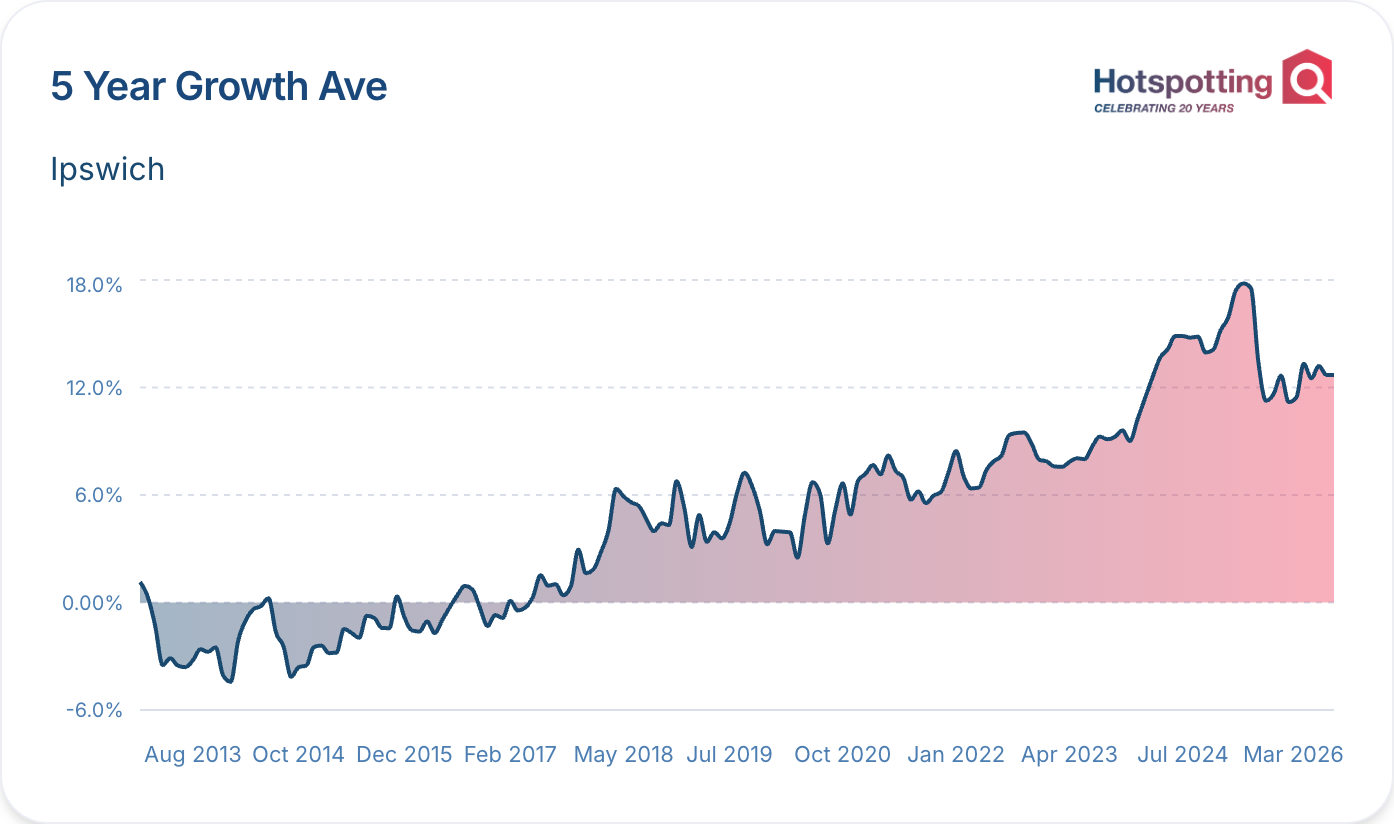
- Proven and Consistent Capital Growth: The Ipswich 4305 postcode delivered 10.66% growth in the past 12 months, a 5-year average annual growth of 12.69%, and a strong 7.38% gain in the most recent quarter alone — consistent, compounding growth that rewards patient investors across market cycles.
- Accessible Median Entry Point: At a median house price of $799,500 with a “Consistent” Autumn Price Predictor classification and 4.12 months of inventory, Ipswich central represents one of the last genuinely accessible entry points within commuting distance of Brisbane, well below Brisbane’s $1 million+ median and still growing strongly.
- Attractive Rental Yields: A median rental yield of 3.63% combined with a vacancy rate of just 0.99% creates a compelling landlord’s market where demand consistently exceeds supply, supporting both yield performance and continued rent growth as population swells.
- Market Heat with Stability: 51 house sales in the past 12 months, 34 days median on market, active Market Heat 🔥, and a “Consistent” price predictor classification signal a market with genuine buyer depth and steady price progression.
- Australia’s Fastest-Growing City: Ipswich is on track to reach 533,802 residents by 2046, nearly doubling its current LGA population and underpinning sustained housing demand for decades.
- Massive Land Value Uplift: Total combined land values across Ipswich City reached $48.64 billion in 2026, a 51% increase since the last 2023 valuation.
- RAAF Base Amberley Employment Anchor: Australia’s largest military base employs over 5,000 personnel and drives consistent housing demand.
- Greater Springfield & Ripley Valley Growth Engines: Two of Australia’s largest urban growth projects supporting long-term demand and capital appreciation.
- Ipswich City Plan 2025: Targets 100,000 new dwellings over 20 years and creates planning certainty for future growth.
- Affordability Driving Structural Demand: Relative affordability compared with Brisbane continues attracting first home buyers, investors, and renters.
For young families seeking space and value, first home buyers entering the market, yield-focused investors, and long-term capital growth investors, the Ipswich region represents South East Queensland’s most compelling multi-decade investment proposition. Its combination of the nation’s fastest urban growth mandate, a 51% land value surge, diversified micro-markets from heritage to masterplanned, defence and university employment anchors, and a clear infrastructure pipeline of city-scale proportions makes Ipswich a region that cannot be ignored by any serious Brisbane-region property investor.
Current Ipswich Market Snapshot (Source ProprTrack as of April 2026):
- 5,000+ houses sold in the past 12 months
- Top suburbs by activity
- Redbank Plains: 523 sales
- Springfield Lakes: 395 sales
- Ripley, Brassall, Spring Mountain: 200+ each
- Price range: $682,250 → $1.53M (One Mile to Brookwater)
- 19 suburbs at or below $800,000
- Up to 22% annual growth (Churchill, Sadliers Crossing, Bundamba)
- 23% average annual growth (5 years) – (Leichhardt, Riverview)
Final Thoughts from a Local Buyers Agent
The Ipswich numbers as of April 2026 are simply impossible to ignore. More than 5,000 house sales in the past 12 months, a transaction volume that rivals or exceeds many inner Brisbane markets, tells you this is not a fringe or speculative market but one with genuine, broad-based buyer depth across every price point from $682,250 to $1.53 million. The fact that 19 suburbs still sit at or below $800,000 means genuine affordability has not yet been fully arbitraged away, but with Churchill, Sadliers Crossing, and Bundamba delivering up to 22% annual growth, and Leichhardt and Riverview averaging 23% per annum over five years, the compression between Ipswich and Brisbane is accelerating.
The IRSAD Decile 1 profile of central Ipswich 4305 reflects its working-class heritage and historically, that profile in a rapidly growing, infrastructure-rich city environment is precisely where long-term value accumulates. With 59% home ownership, a 0.99% vacancy rate, and a city plan committing to 100,000 new homes over two decades, the fundamentals point in one direction. The window of accessible pricing in this region will not remain open indefinitely.
If you are comparing other South East Queensland growth regions, you may also wish to read our Region in Focus guides on:
- Milton
- Logan City Region
- Gold Coast
Each offers its own variation on the SEQ growth story, with different infrastructure catalysts, price points, and demographic profiles, yet shares with Ipswich the same fundamental story of population-driven demand meeting constrained supply in one of Australia’s fastest-growing corners.
At The Property Baron, we help you navigate the market, uncover hidden opportunities, and secure the right property, often before it hits the open market.
Thinking of buying in Ipswich Region Overview? Let’s chat.
Contact us today to discuss your brief.