
Suburb in Focus: Toowoomba Region
Located 125 kilometres west of Brisbane atop the Great Dividing Range at 700 metres elevation, Toowoomba Region offers an exceptional blend of regional city amenity, agricultural prosperity, and unique lifestyle character that makes it one of Queensland’s most liveable inland destinations. As Australia’s largest inland city and Queensland’s second-largest regional centre, positioned at the gateway to the Darling Downs with the iconic Toowoomba Carnival of Flowers attracting 470,000 visitors annually, comprehensive education including University of Southern Queensland, thriving agricultural economy, and temperate climate with four distinct seasons, this elevated regional hub has become the ideal choice for families seeking genuine community living, tree-changers escaping metropolitan pressures, and investors recognizing exceptional value in Queensland’s fastest-growing regional property market with proven capital strength.
History of Toowoomba Region
The Toowoomba area has been home to the Jagera, Giabal, and Jarowair peoples for millennia, serving as a significant meeting place where the country of three traditional owners converges. The name “Toowoomba” is believed to derive from the Aboriginal word “tchow-woom-ba,” meaning “the place of the swamps” or “the place where the melon grows.” European settlement began in 1849 when the Drayton township was surveyed, followed by Toowoomba’s official proclamation in 1860. The fertile volcanic soil of the Darling Downs and strategic position atop the range made Toowoomba a vital agricultural and transportation hub.
The city earned its “Garden City” reputation in the 1890s through extensive tree-planting programs and horticultural excellence. This heritage culminated in the establishment of the Toowoomba Carnival of Flowers in 1950, conceived by businessman Essex Tait and the Chamber of Commerce to revive community spirit and economic activity following World War II. The first parade attracted over 50,000 spectators, and the festival has continued annually ever since, achieving Australian Tourism Hall of Fame status in 2018 after winning Gold Awards for Major Festival and Event three consecutive years. The 2024 75th anniversary carnival generated $29.43 million for the Queensland economy with record attendance of 470,608 visitors. Today, Toowoomba represents regional Queensland living at its finest—where rich agricultural heritage meets modern infrastructure, Queens Park Botanic Gardens and Laurel Bank Park showcase world-class horticulture, the Cobb & Co Museum preserves Queensland’s pioneering history, and genuine regional community creates quality of life impossible in metropolitan capitals.
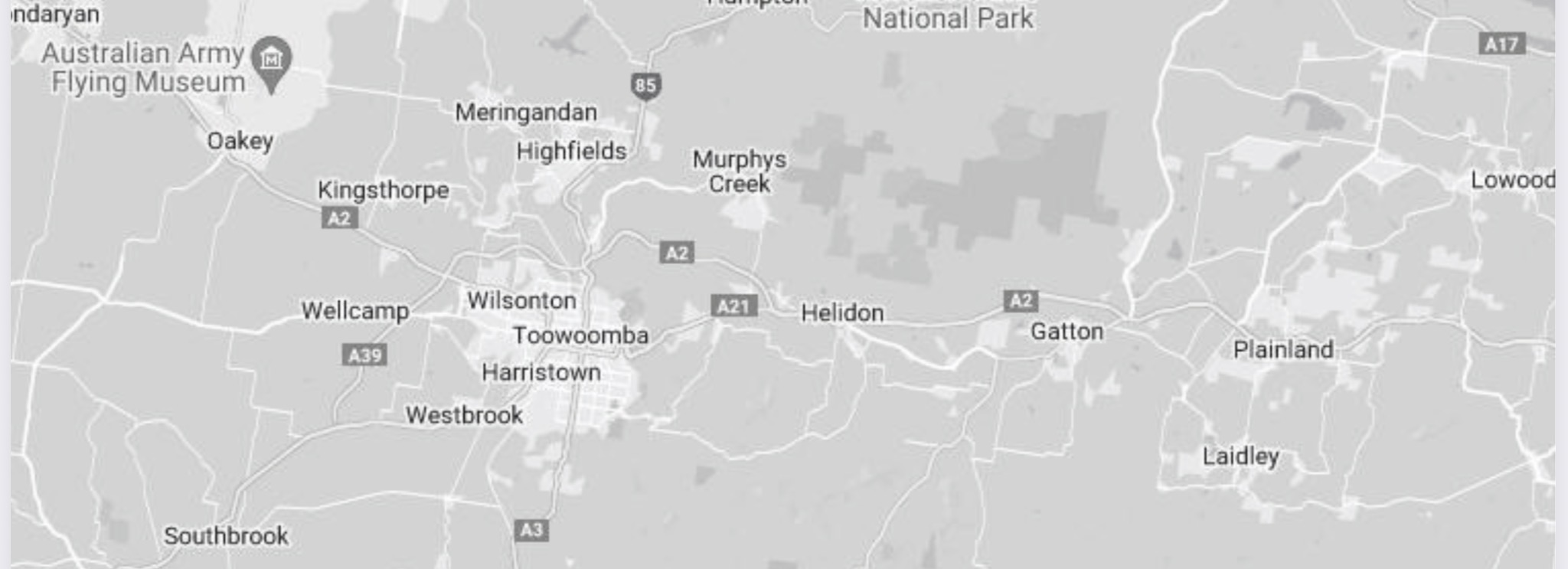
Toowoomba Region Demographics & Local Insights
Toowoomba Region is a thriving regional community with strong economic fundamentals and growing appeal. The broader Toowoomba Regional LGA has approximately 173,000 residents (2021), projected to reach 209,000 by 2036, making it Queensland’s second-largest regional population. The region achieved strong population growth of 1.41% in 2024, rebounding from pandemic lows. The unemployment rate has declined steadily from 6.7% in 2020 to just 2.5% in the March 2025 quarter, with job vacancies remaining well above pre-pandemic averages, demonstrating a thriving local economy.
The city’s Gross Regional Product reached $15.14 billion in FY2024, with an employment base of more than 82,500 jobs. The region has strong 62% home ownership rates, with household compositions comprising 28% couples, 26.1% couples with children, and 26% lone persons. Top employment industries include Health & Social Assistance (18.4% of workers, generating 14,650 jobs), Education & Training, Retail Trade, Construction, and Manufacturing. Mining is the most productive industry by value, generating $1.981 billion in FY2024, followed by healthcare ($1.578 billion) and agriculture ($1.158 billion).
Major Infrastructure Transforming Toowoomba
Toowoomba is experiencing unprecedented infrastructure investment that is fundamentally transforming the region’s economic trajectory and positioning it as a critical logistics, healthcare, aerospace, and renewable energy hub for Australia.
Healthcare Infrastructure – $1.9 Billion Hospital Redevelopment
The $1.9 billion Toowoomba Hospital redevelopment represents Queensland’s largest regional health investment and will transform healthcare delivery across the Darling Downs. Construction commenced in May 2024 on the new Baillie Henderson Health Campus, with completion expected December 2027. The project will deliver 538 overnight beds (118 more than current capacity), expanded emergency department, cardiac catheterisation lab, additional dialysis facilities, acute and non-acute care areas, mental health services, and comprehensive specialist outpatient clinics. The existing Toowoomba Hospital will be demolished with all services consolidated at the new campus. Supporting infrastructure includes the $42 million Bunya Day Surgery (opened April 2024) providing capacity for an additional 4,000 surgeries annually, St Vincent’s Private Hospital $8 million intensive care unit with negative-pressure rooms, and Millmerran’s new $28.5 million multipurpose health facility nearing completion in June 2025.
Transport Infrastructure – Inland Rail & Second Range Crossing
The transformative $31.4 billion Inland Rail project—a 1,700km freight rail connecting Melbourne to Brisbane via Toowoomba—promises to position the region as Australia’s inland logistics hub, with completion expected in 2030-31. The 28km Toowoomba section (Gowrie to Helidon) includes building a 6.2km freight tunnel through the Great Dividing Range—the largest diameter diesel freight tunnel in the Southern Hemisphere. Also under consideration is a revolutionary $14.5 billion, 52km underground rail link featuring driverless, autonomous, battery-powered trains connecting to an intermodal freight hub at Ipswich before reaching the Port of Brisbane, potentially delivering $820 million in annual economic, social, and environmental benefits.
The 41km Second Range Crossing (Toowoomba Bypass), opened in 2019, provides an alternative crossing of the steep Toowoomba Range and has dramatically improved freight connectivity. The Toowoomba Enterprise Hub (TEH) encompasses Wellcamp Airport and Business Park, Charlton Logistics Park, Witmack Industry Park, and the $16 million InterLinkSQ intermodal terminal, positioned at the junction of three major highways (Gore, Warrego, New England) with direct Second Range Crossing access. Over the next two decades, TEH is expected to become a billion-dollar project creating 1,500 jobs.
Wellcamp Airport & Aerospace Precinct
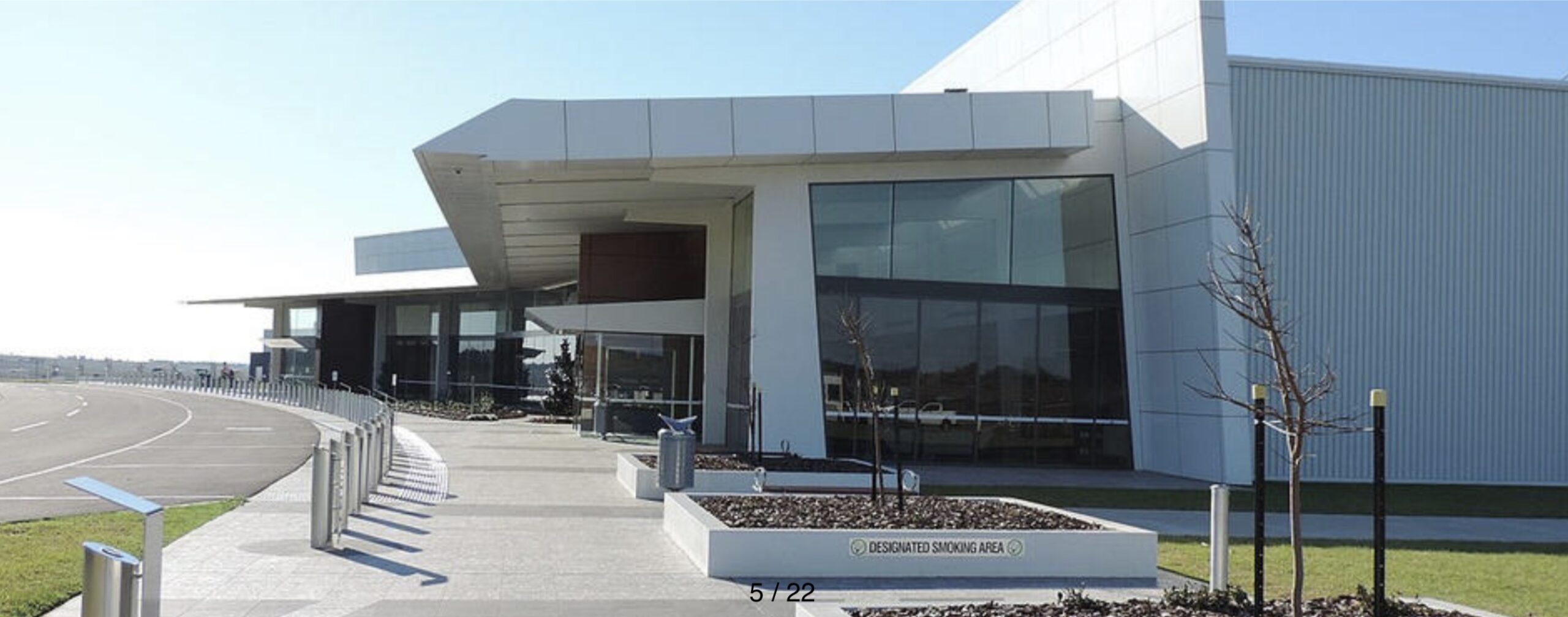
The privately-owned Wellcamp Airport (opened 2014) serves as the gateway for the Darling Downs and Western Downs, providing domestic and international passenger services plus Queensland’s only dedicated 747-8F international freighter service. The 500-ha Wellcamp Business Park is becoming a major centre for aviation, logistics, transport, corporate and mining services.
The $180 million Aerospace and Defence Precinct represents a watershed moment for Toowoomba’s global profile. Boeing Australia’s 9,000 sq m production facility will manufacture the MQ-28 Ghost Bat autonomous defence aircraft—the first military combat aircraft designed and manufactured in Australia in 50 years. The precinct will employ 300+ Boeing employees alone, with supporting industries including JRS Group’s coating and treatment facility creating 120-150 additional jobs. Qantas also operates a pilot training academy at Wellcamp with capacity to train 250 pilots annually.
Space & Technology Innovation
Toowoomba’s University of Southern Queensland (UniSQ) leads Australia’s space innovation through multiple facilities: the nation’s first static rocket testing site outside Defence forces (Helidon Rocket Test Site, completed 2021); Mount Kent Observatory at Greenmount—the only Southern Hemisphere facility supporting NASA’s Transiting Exoplanet Survey Satellite mission; and the $180 million iLAuNCH hub (Innovative Launch, Automation, Novel Materials, Communications, and Hypersonics), Australia’s largest space research facility, expected to boost the local economy by $3.65 billion and employ 20,000 people by 2030. The Toowoomba Technology Park features Australia’s first high-performance, large-scale data centre outside a capital city.
Renewable Energy & Resources – $1+ Billion Investment
The region is experiencing explosive growth in renewable energy infrastructure. The $1 billion Bulli Creek Solar Project (125km southwest of Toowoomba) features a 775MW solar farm with potential expansion to 2GW capacity, with construction expected to begin in 2025. The Punchs Creek Solar Farm near Millmerran envisions 800MW solar complemented by 250MW battery storage. The $1.65 billion Big-T Pumped Hydro Energy Storage Project near Cressbrook Dam aims to deliver 400MW hydroelectric power with 10 hours of storage capacity plus 200MW battery storage. The 100MW Atria BESS Project in Aubigny and the $385 million Wambo Wind Farm (42 turbines producing 252MW) demonstrate the region’s commitment to renewable energy leadership.
The $900 million New Acland Coal Mine Stage 3 expansion (approved January 2025 after 11-year legal battle) will generate up to $1 billion in returns, creating 600 construction jobs and 400 permanent roles, ensuring mining continues supporting the regional economy alongside renewable energy transition.
Water Infrastructure & CBD Renewal
The $370 million Toowoomba-Warwick water pipeline (tender process underway) will carry water 109km from Wivenhoe Dam to Toowoomba and Warwick, creating 420 jobs. The mandatory $270 million Cressbrook Dam Safety Improvement Project, Queensland’s largest dam safety upgrade undertaken by local government will improve flood resilience from 1 in 8,000-year events to 1 in 430,000-year events, with Council seeking $200 million in state and federal funding.
The 50-ha Toowoomba Railway Parklands Priority Development Area will feature an 8.6ha parkland rivalling Queens Park, 26ha of urban renewal space, and 43,500m² commercial floor space, offering $680 million in economic benefits and 3,000 jobs over 20 years. A $65 million CBD makeover proposal includes a 12-storey building with 80 units, 1,800-person conference centre, 300 underground car parks, new hotel, restaurants, bars, cafes, urban parkland and 4,000 sq m modern office space. The approved $2.4 million Gasworks plant mixed-use development on Neil Street will include two-storey shopping centre, commercial tenancies, 220 car parks and 56 units across 10 storeys.
Lifestyle, Education, and Amenities in Toowoomba Region
Toowoomba’s lifestyle centres around its unique positioning as Queensland’s elevated inland capital with temperate climate and four distinct seasons. Daily life means weekend strolls through the award-winning Queens Park Botanic Gardens featuring 26 hectares of meticulously maintained gardens with a $15.4 million upgrade completed in September 2022, coffee at vibrant cafe precincts along Margaret Street and Ruthven Street, dining at diverse restaurants showcasing Darling Downs produce, and enjoying cultural offerings including the heritage-listed Empire Theatre (1911 venue hosting major touring productions), Toowoomba Regional Art Gallery, and numerous festivals throughout the year.
The September Toowoomba Carnival of Flowers transforms the city with 40+ million blooms, the spectacular Grand Central Floral Parade attracting 75,000 spectators, over 80 events across four weeks, private garden competitions, and international recognition, achieving Australian Tourism Hall of Fame status in 2018 after winning Gold Awards for Major Festival and Event three consecutive years. The 2024 75th anniversary carnival generated $29.43 million for the Queensland economy with record attendance of 470,608 visitors, including 149,538 visitor nights. Total tourism sales in Toowoomba reached $1.31 billion in FY2024, demonstrating the sector’s economic significance.
Looking ahead to the 2032 Olympic Games, Toowoomba’s showgrounds will be transformed into an Equestrian Centre of Excellence, with upgrades including additional arenas and warm-up facilities, upgraded stables, new amenities and change facilities, and an upgraded cross-country course. The Olympics are predicted to bring an extra 1.2 million people to Queensland before 2036, with Toowoomba expected to have the fifth-highest resident increase (11% growth), according to Colliers’ Queensland’s Regions to Reign report.
Education is comprehensive with University of Southern Queensland providing tertiary education with a Toowoomba campus supporting 450 students, while TAFE Queensland South West offers comprehensive vocational training in agriculture, business, horticulture, IT and nursing. There are 60 public schools and around 25 private schools, including Toowoomba Grammar School (the most expensive private school in the Darling Downs), Fairholme College, and Downlands College. New educational infrastructure includes Toowoomba Grammar’s four-storey Design, Engineering, and Technology (DET) centre opening in 2026, and Highlands Christian College’s 40-hectare new campus in Highfields expected to open in 2027, reaching 750 students and 120 staff by 2036.
Healthcare is anchored by the new $1.9 billion Toowoomba Hospital (under construction, completion December 2027), St Vincent’s Private Hospital with new $8 million intensive care unit, and comprehensive primary care. The region offers exceptional outdoor recreation including picnic areas at Picnic Point with panoramic Lockyer Valley views, walking trails at Redwood Park, Table Top Mountain bushwalking, nearby Crows Nest and Hampton for weekend escapes, and easy access to Brisbane (90 minutes) via Warrego Highway or Toowoomba Wellcamp Airport for domestic flights.
Major residential developments are transforming the region, including the $200 million GemLife Highfields over-50s facility (phased rollout from late 2025 with 300+ homes), $57.5 million Botanic Retirement Village in Highfields (231 homes), $150 million Gainsborough Lodge subdivision at Wellcamp (340 lots, eight stages), $250 million Glenvale Village (300+ lots), and the completion of The Avenues of Highfields (award-winning subdivision with final stages in 2025-2026). Social housing investment exceeds $100 million before 2030, including Mission Australia’s $150 million 185-unit development on Princess Street Newtown and Brisbane Housing Company’s $35 million 75-unit mixed-use development.
For families and tree-changers seeking a place where temperate four-season climate replaces coastal humidity, world-class gardens bloom year-round, genuine regional community creates connections, comprehensive education spans prep to university, transformative infrastructure including Inland Rail and new hospital positions the region for decades of growth, and affordable property delivers genuine lifestyle quality with proven capital appreciation, Toowoomba is Queensland’s ultimate inland destination.
Why Buy Property in Toowoomba Region? (For Investors & Homeowners)
Exceptional Regional Value: Median house price $680,000-$741,500 with outstanding 11.5% annual growth and remarkable 81.3% five-year appreciation (median dwelling values)—genuine affordability meeting proven capital strength
Unprecedented Infrastructure Investment: $1.9B hospital (completion 2027), $31.4B Inland Rail positioning Toowoomba as Australia’s inland logistics hub, $1B+ renewable energy projects, Boeing MQ-28 Ghost Bat aerospace manufacturing creating global profile
Rapid Sales & Tight Supply: Properties selling in just 15-18 days with inventory at only 1.6 months, demonstrating exceptional buyer demand and supply-demand imbalance supporting continued price growth
Outstanding Rental Fundamentals: Vacancy rates as low as 0.3%-0.6% in key suburbs with rental yields up to 6.8% (Yarraman) and 4.0-4.83% in premium locations, creating exceptional investor security
Booming Jobs Market: Unemployment just 2.5% (March 2025), down from 6.7% pandemic peak, with 82,500+ jobs across diversified economy generating $15.14B GRP annually
Economic Diversification: Mining ($1.981B output), Healthcare ($1.578B), Agriculture ($1.158B), plus transformative aerospace, space technology, renewable energy, and logistics sectors reducing single-industry reliance
Population Growth Trajectory: 173,000 (2021) growing to 209,000 (2036), plus expected 11% boost from 2032 Olympics as one of top 10 migration hotspots for capital-city dwellers (Regional Australia Institute)
Tourism Economic Anchor: Carnival of Flowers generating $29.43M annually with 470,608 visitors, Australian Tourism Hall of Fame status, $1.31B total tourism sales creating sustained regional profile and economic resilience
2032 Olympics Catalyst: Equestrian Centre of Excellence transformation delivering long-term benefits, international exposure, and sustained tourism/economic gains beyond the Games
For families, tree-changers, and savvy investors, Toowoomba Region represents Queensland’s best regional value proposition. It delivers the perfect combination of genuine affordability ($680,000-$741,500 median), exceptional capital growth (81.3% five years), rapid sales demonstrating consistent demand (15-18 days on market), extraordinarily tight rental markets (0.3%-0.6% vacancy in key suburbs), transformative infrastructure positioning the region as Australia’s inland capital (Inland Rail, new hospital, Boeing aerospace, space innovation hub), comprehensive education and healthcare, temperate four-season climate, world-renowned Carnival of Flowers and horticultural amenity, 2032 Olympics infrastructure legacy, and that rare opportunity to secure Queensland’s premier inland city before $31.4B Inland Rail completion and Olympic-driven population surge—making it ideal for those seeking authentic regional lifestyle with exceptional long-term investment potential and proven appreciation fundamentals.
Current Market Snapshot
(Source ProprTrack as of March 2026):
- Median house price: $680,000
- 12-month house growth: 11.5%
- 5-year growth: 81.3%
- Number of Sales in the past 12-months: 42 -44
- Median days on the Market: 18 Days
- Rental Vacancy rate: 0.6%-1.4%
Final Thoughts from a Local Buyers Agent
Toowoomba Region delivers one of Australia’s most compelling regional transformation stories, where exceptional 81.3% five-year growth and current 11.5% annual appreciation meet $680,000-$741,500 median house prices in a city experiencing unprecedented infrastructure investment. With properties selling in just 15-18 days, extraordinarily low 1.6-month inventory, record-low 2.5% unemployment, robust 1.41% population growth accelerating toward 209,000 by 2036, transformative $1.9B hospital (2027 completion), game-changing $31.4B Inland Rail positioning Toowoomba as Australia’s logistics hub, Boeing MQ-28 Ghost Bat aerospace manufacturing creating global profile, $180M space innovation hub employing 20,000 by 2030, $1B+ renewable energy projects, 2032 Olympics Equestrian Centre of Excellence, and annual Carnival of Flowers generating $29.43M with 470,608 visitors, it’s clear why families, tree-changers, and forward-thinking investors continue securing their futures in this elevated Garden City with authentic regional character, proven capital strength, world-class infrastructure pipeline, and exceptional lifestyle quality impossible in metropolitan markets or coastal alternatives.
If you are comparing other Queensland regional markets, you may also wish to read our Suburb guides on the Sunshine Coast
QLD own variation of lifestyle, infrastructure and price point, yet Toowoomba stands apart with its unique temperate climate, agricultural prosperity, and exceptional regional value proposition.
You can also read our recent case study purchases across regional Queensland to see how we approach regional market acquisitions strategically and with long-term perspective.
At The Property Baron, we help you navigate the market, uncover hidden opportunities, and secure the right property, often before it hits the open market.
Thinking of buying in Toowoomba Region?
Let’s chat. Contact our Queensland team today to discuss your brief.