
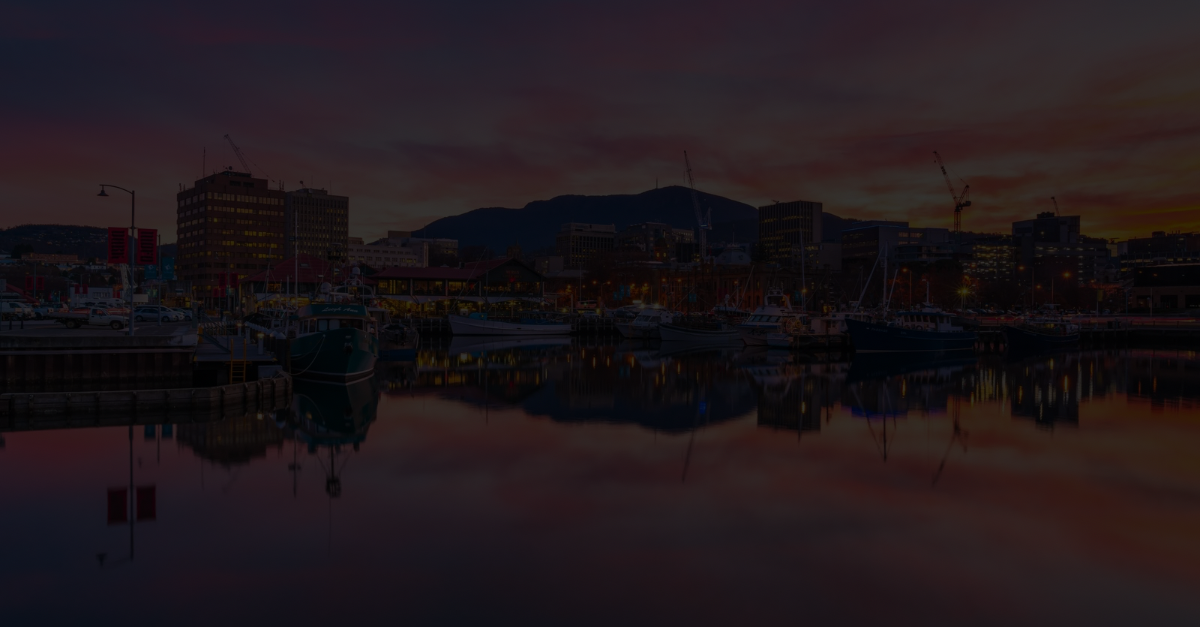
Suburb in Focus: Hobart, Tasmania
Located on the banks of the River Derwent at the foothills of kunanyi/Mount Wellington, Hobart offers an exceptional blend of heritage character, natural beauty, and vibrant cultural atmosphere that makes it Australia’s most distinctive capital city. As Tasmania’s largest city and state capital, positioned just 15 kilometres from Hobart International Airport and 50 kilometres from Port Arthur’s World Heritage-listed convict site, this historic waterfront city combines award-winning attractions like MONA (Museum of Old and New Art), the iconic Salamanca Market, Australia’s second-deepest natural harbour, and genuine Antarctic gateway status, creating a cosmopolitan haven where residents enjoy unparalleled quality of life with authentic island character.
History of Hobart, Tasmania
Hobart’s story begins with the Muwinina people who inhabited the area for at least 35,000 years before European contact. The Dutch explorer Abel Tasman sighted Tasmania in 1642, naming it Van Diemen’s Land. In 1804, Lt-Governor David Collins established the settlement at Sullivans Cove, naming it Hobart Town after then British Secretary of State Lord Hobart. The settlement served as a penal colony, with convict labour constructing many of the sandstone warehouses and buildings that still define the city’s character today.
The city flourished as a major port during the 19th century whaling and sealing boom, with the River Derwent providing one of Australia’s finest deepwater harbours. Hobart Town became officially recognised as a city on 21 August 1842, and was renamed simply “Hobart” from 1 January 1881. The historic Salamanca Place warehouses, built by convicts in the 1830s-1850s, have been transformed into galleries, restaurants, and craft shops, while the iconic Saturday Salamanca Market (established 1972) has become Tasmania’s most visited tourist attraction with over 300 stallholders. Today, Hobart represents Australian capital city living at its most authentic—where convict-era sandstone architecture frames waterfront precincts, world-class museums like MONA redefine contemporary art experiences, kunanyi/Mount Wellington provides spectacular hiking and snow in winter just 20 minutes from the CBD, and genuine community spirit creates connections impossible in larger mainland capitals.
Hobart, Tasmania Demographics & Local Insights
Hobart is a thriving creative and professional community with a postcode population of 15,645 (2021 Census) within the broader Greater Hobart area of approximately 250,000 residents—representing 40% of Tasmania’s total population. The suburb has a high 63% owner-occupier rate, demonstrating strong residential commitment to the capital city lifestyle. The IRSAD Score of 8 (decile 1-10) reflects diverse socioeconomic composition, while the top industries reveal a knowledge-based economy: Health (18%), Education (13%), Public Admin (11%), Accommodation (11%), and Professional Services (10%).
What makes Hobart extraordinary is its transformation from colonial outpost to Australia’s most liveable small capital while preserving authentic heritage character. The city occupies a spectacular natural setting between kunanyi/Mount Wellington (1,271m) and the River Derwent’s deep harbour, creating unique topography where mountain bushwalking and waterfront living coexist within minutes. Hobart attracts creative professionals and artists drawn to MONA and the vibrant arts scene, health and education workers in Tasmania’s largest employment hubs, Antarctic researchers and support personnel (Hobart serves as the Antarctic gateway for Australia and France), food and beverage entrepreneurs capitalising on Tasmania’s premium produce reputation, and tree-changers seeking genuine community and lifestyle quality impossible in larger capitals. With the world’s cleanest air quality, second-lowest rainfall among Australian capitals, historic Salamanca Market every Saturday attracting over one million annual visitors, MONA redefining museum experiences, Royal Tasmanian Botanical Gardens, and properties selling rapidly, Hobart delivers that rare combination of heritage capital city infrastructure, cultural sophistication, natural beauty, and genuine affordability compared to mainland capitals.
Lifestyle, Education, and Amenities in Hobart, Tasmania
Hobart’s lifestyle centres around its spectacular natural setting and rich cultural offerings. Daily life means morning coffee at Salamanca Place waterfront cafes, weekend browsing at the famous Saturday Salamanca Market with 300+ stallholders selling Tasmanian produce and crafts, visiting world-renowned MONA (Museum of Old and New Art) via scenic ferry, hiking kunanyi/Mount Wellington’s summit tracks with panoramic views across the city and Derwent estuary, and enjoying Tasmania’s award-winning cool-climate wines, craft spirits, and farm-to-table dining scene. The city offers exceptional outdoor recreation including sailing on the deep-water harbour, bushwalking in kunanyi/Mount Wellington’s alpine environment, cycling the Intercity Cycleway, exploring Battery Point‘s historic cottages, and accessing Bruny Island and Huon Valley wilderness within an hour’s drive.
Education is comprehensive with University of Tasmania (UTAS) providing tertiary education and research excellence, numerous primary and secondary schools including quality state and independent options, and vocational training facilities. Transport includes Metro Tasmania’s bus network serving Greater Hobart, Hobart International Airport 15 kilometres east with domestic and limited international services, and the developing Hobart Transport Hub. Healthcare is anchored by Royal Hobart Hospital, Tasmania’s largest tertiary hospital, plus Calvary Hospital and comprehensive primary care. Cultural attractions include the Tasmanian Museum and Art Gallery, Theatre Royal (Australia’s oldest continuously operating theatre, established 1837), Cascade Brewery (Australia’s oldest operating brewery, established 1824), and year-round festivals including Dark Mofo, Taste of Tasmania, and Sydney to Hobart Yacht Race finish. For professionals, creatives, and families seeking a place where convict-era sandstone architecture meets contemporary museum excellence, mountain wilderness sits 20 minutes from waterfront living, and genuine capital city amenity meets island community spirit, Hobart is Australia’s ultimate lifestyle capital.
Why Buy Property in Hobart, Tasmania? (For Investors & Homeowners)
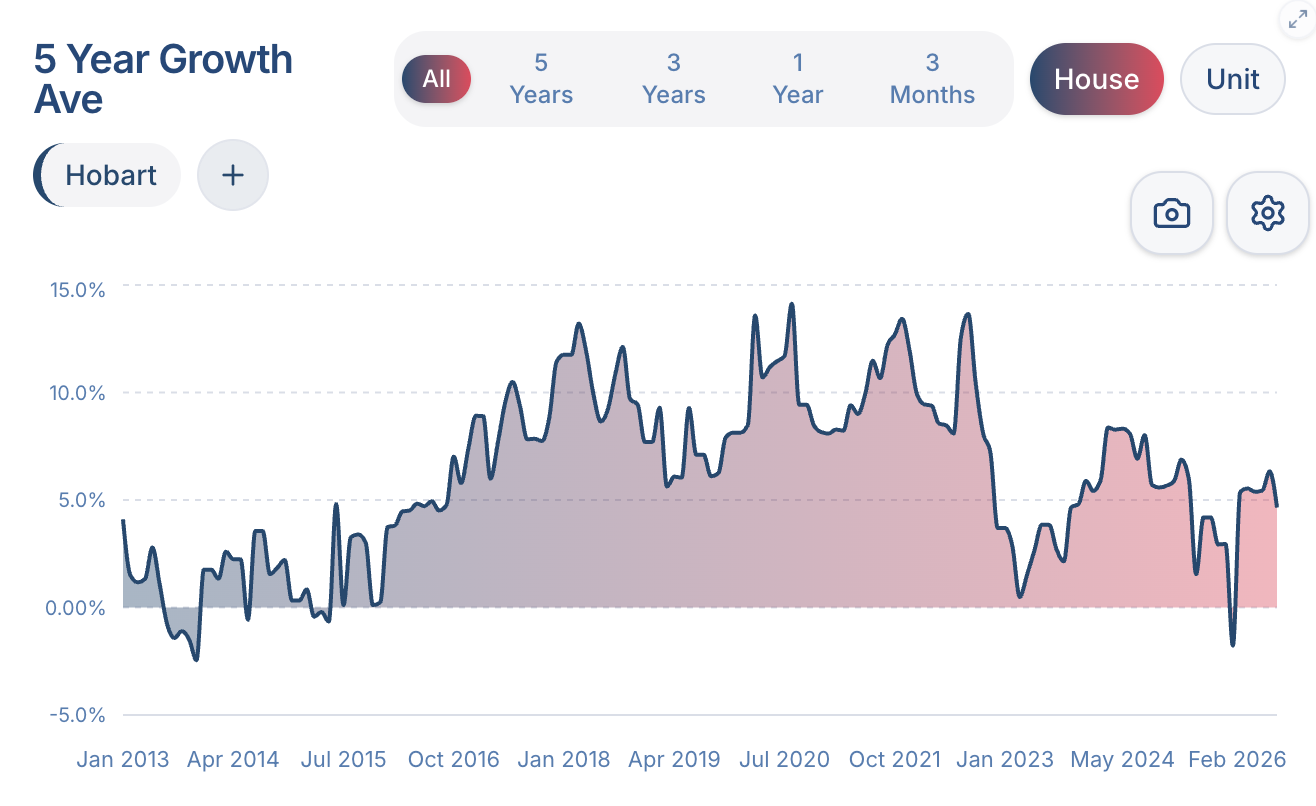
Capital City Affordability: Median house price $985,250 with exceptional 4.65% five-year average growth—genuine capital city living at accessible price points compared to mainland capitals
Strong Rental Fundamentals: Extraordinarily low 0.82% vacancy rate with 3.36% median rental yield creating exceptional investor security and consistent income
Limited Supply Market: Only 18 house sales in past 12 months with 32 days on market demonstrates tight supply and strong owner-occupier commitment in this premium capital city location
Heritage & Cultural Appeal: Convict-era architecture, UNESCO World Heritage sites, MONA, Salamanca Market, and Antarctic gateway status create unique lifestyle appeal supporting long-term values
Knowledge Economy Hub: Top industries in Health (18%), Education (13%), Public Admin (11%), and Professional Services (10%) provide stable employment base and quality tenant demographics
Natural Amenity: kunanyi/Mount Wellington, deep-water harbour, world’s cleanest air, and access to Tasmania wilderness create lifestyle quality impossible to replicate in other capitals
Interstate Migration: Tasmania’s population growth driven by interstate migration from Victoria, NSW, and Queensland as Australians seek lifestyle quality and affordability
Antarctic Gateway: Hobart’s role as Australia and France’s Antarctic operations base provides unique economic diversification and international research community
For professionals, creatives, and savvy investors, Hobart represents Australia’s best capital city value proposition. It delivers the perfect combination of genuine heritage character, cultural sophistication with MONA and vibrant arts scene, proven long-term appreciation (4.65% five-year average), extraordinarily tight rental market (0.82% vacancy), spectacular natural setting with mountain and harbour, and that rare opportunity to secure capital city living with authentic community character—making it ideal for those seeking Australia’s most distinctive address with exceptional lifestyle and investment fundamentals.
Current Market Snapshot (Source ProprTrack as of March 2026):
- Median house price: $985,250
- 12-month house growth: -17.27%
- 5-year growth: 23.25 %
- Number of Sales in the past 12-months: 18
- Median days on the Market: 32 Days
- Rental Vacancy rate: 0.82 %
Final Thoughts from a Local Buyers Agent
Hobart delivers one of Australia’s most distinctive capital city investment stories, where exceptional 4.65% five-year average growth and extraordinarily low 0.82% vacancy rate meet $985,250 median in a World Heritage city. While recent 12-month decline of -17.27% reflects broader Tasmanian market correction after pandemic-era peaks, the long-term fundamentals remain compelling: limited supply (only 18 sales annually), high owner-occupier commitment (63%), knowledge economy employment base (Health 18%, Education 13%), and irreplaceable lifestyle amenity with MONA, Salamanca Market, kunanyi/Mount Wellington wilderness, and authentic capital city character creating sustained demand from interstate migrants and locals alike.
Each offers its own variation of heritage character, harbour access and price point, yet shares similar fundamentals around capital city location, cultural amenity and long-term appreciation drivers.
You can also read our recent case study purchases around Australia to see how we approach acquisitions strategically and with long-term perspective.
Thinking of buying in Hobart, Tasmania? Let’s chat.
Let’s chat. Contact our team today to discuss your brief.